How Startups Are Scaling Design 10x Faster with AI Tools
Author
Vignesh
Published On
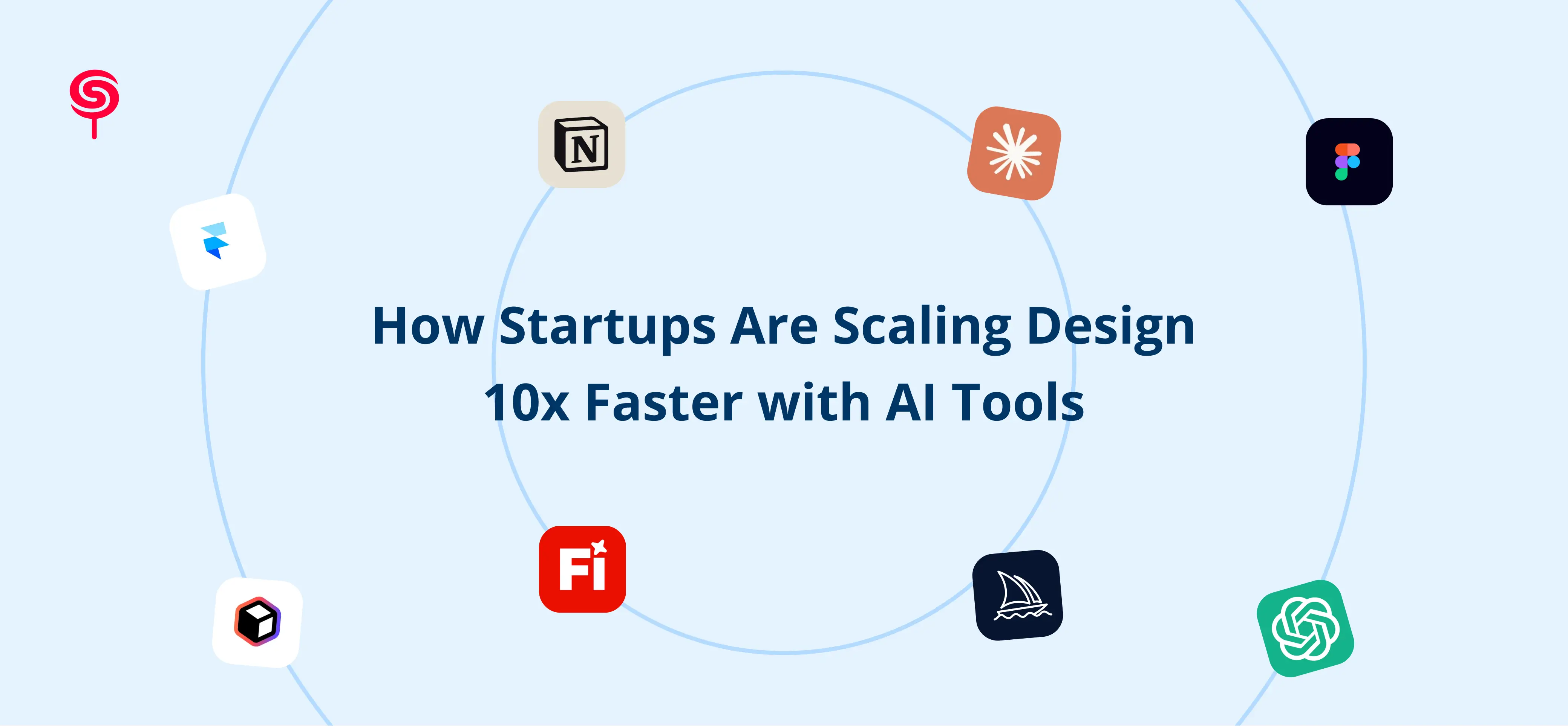
Startups today don’t fail because of lack of ideas they fail due to speed, scale, and clarity. Design is often the bottleneck: limited budgets, tight timelines, and constant iteration.
This is where AI-powered design tools change the game.
Modern design studios are no longer just pixel pushers they are AI-enabled problem solvers who help startups move from idea to impact faster than ever.
Fact: Startups using AI-assisted design workflows can reduce early-stage design cycles by 40–60% while improving consistency and decision-making.
Why Startups Need AI-Driven Design
Startups face tight budgets and rapid iteration needs, making traditional design processes inefficient. AI tools cut design time by up to 25% and enable non-designers to contribute, accelerating product development. This efficiency allows startups to scale visually compelling products, boosting user acquisition and funding success. Design agencies positioning as AI experts attract clients seeking these advantages, turning blog readers into leads.
For startups specifically, design impacts three critical metrics:
Trust and credibility: Investors, customers, and partners all assess your legitimacy through visual presentation. A founder recently shared how updating their pitch deck design (using AI tools) helped them close a seed round investors explicitly mentioned the "professional presentation" as a confidence factor.
Conversion rates: Proper visual hierarchy, clear calls-to-action, and consistent branding directly impact how many visitors become users. Design changes can shift conversion rates by 200-400%, according to Forrester Research.
Market positioning:Your design communicates whether you're a premium solution or budget option, whether you're innovative or traditional, whether you're enterprise-ready or early-stage. These signals happen visually before a single word is read.
How Design Studios Build Designs Using AI Tools
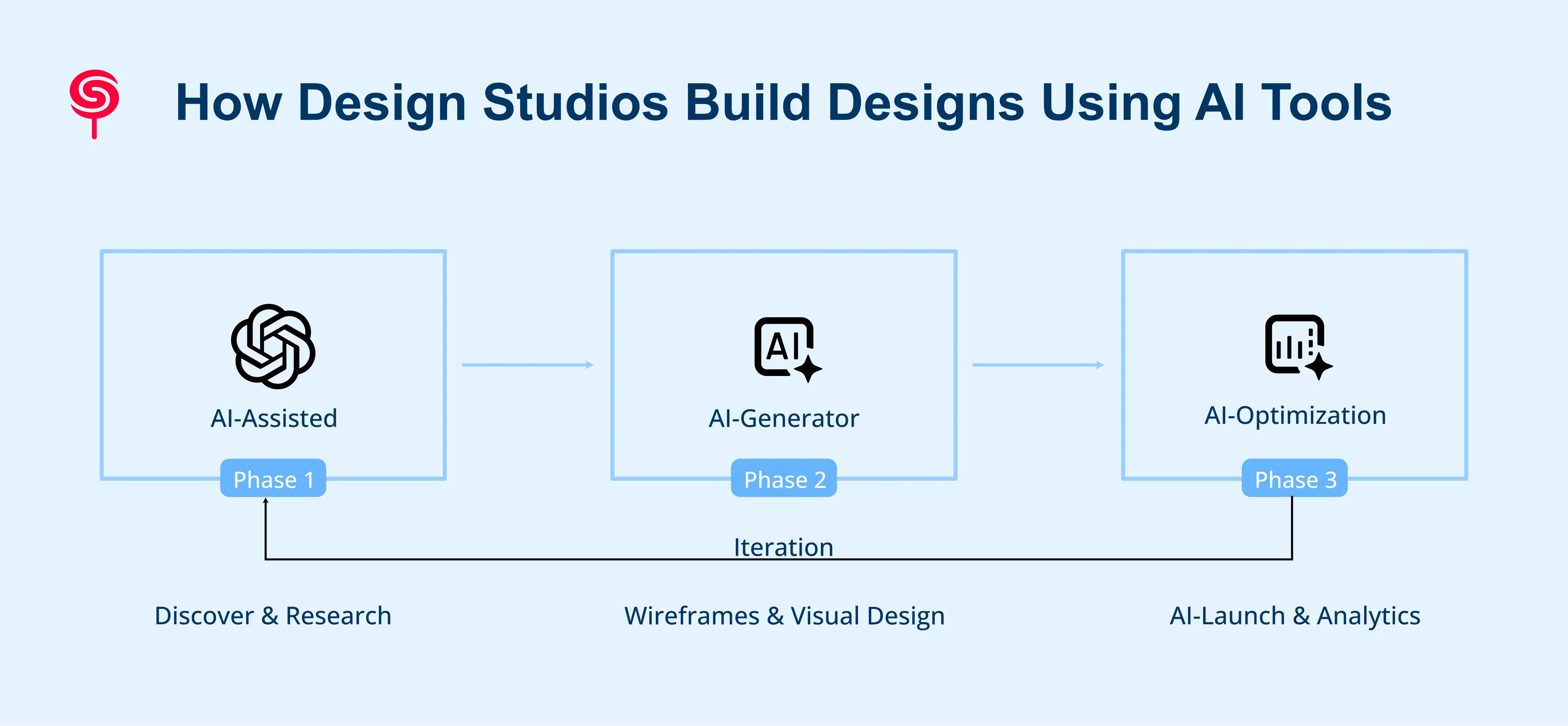
1. AI-Assisted Discovery and Research:
Tools: ChatGPT, Notion AI, Maze AI
How it works:
Convert PRDs into user stories
Identify pain points and JTBD (Jobs To Be Done)
Generate competitor UX audits
Why it matters for startups: Clear problem definition = less rework = faster market entry.
2. AI-Generated Wireframes and UX Flows
Tools: Figma AI, Uizard, Relume
How it works:
Text-to-wireframe generation
Rapid UX flow exploration
Accessibility checks powered by AI
Real impact: Startups can test multiple UX ideas before committing to development.
Visual Design and Branding at Scale
Tools: Midjourney, DALL·E, Adobe Firefly
How it works:
Generate brand moodboards
Create illustration systems
Produce marketing creatives consistently
Why it matters: Startups maintain brand consistency across product, marketing, and social without hiring large teams.
AI-Powered Prototyping and No-Code Launch
Tools: Framer AI, Webflow AI, ProtoPie
How it works:
Convert designs to live websites
Test landing pages quickly
Optimize conversion flows
Startup advantage: Faster validation = faster revenue.
Design Optimization Using AI Analytics
Tools: Hotjar AI, GA4, Mixpanel
How it works:
Heatmap insights
UX friction detection
Predictive design improvements
Result: Design decisions backed by real user behavior, not assumptions.
The Future Is Already Here:
Real-time personalization:
Tools that generate custom designs for individual users based on behavior and preferences. Already being tested by e-commerce leaders.
Voice-to-design:
Describe what you need conversationally, get publication-ready designs. Figma and Adobe are both developing these capabilities.
Automated brand systems:
AI that maintains and evolves your entire brand system, ensuring consistency across all touchpoints automatically.
Advanced user testing integration:
AI that generates designs, tests them with users, and iterates based on feedback all automatically.
The startups that master AI design tools today will have compound advantages as these capabilities expand.
Scaling Design with AI: Key Strategies
Scale from prototype to enterprise-level designs without proportional team growth.
Automation Pipelines: Integrate Figma AI with Jira for task breakdown and dependency tracking.
Modular Systems: Use containerized AI outputs (e.g., Docker for prototypes) for reusable components.
Data-Driven Iteration: AI analyzes usage patterns to predict trends, like Bentley Systems' schematic generation saving redesign time.
Team Expansion: Train non-designers via no-code AI tools, growing output 2.3x.
Cloud Integration: Tools like Google Cloud AI handle increasing loads seamlessly.
Startups adopting these scale 20-30% cost reductions while maintaining quality.
Conclusion:
AI doesn’t replace creativity it amplifies it.
For startups, design with AI means:
Faster launches
Smarter decisions
Scalable growth
For design studios, it’s the strongest way to: Differentiate, attract high-quality leads, and convert followers into paying clients.
Frequently Asked Questions
Which AI design tools are most useful for early-stage startups?
Popular AI tools for startups include:
Figma AI (wireframes & UI generation)
Framer AI (website & landing page creation)
ChatGPT / Claude (UX research, user stories)
Midjourney / DALL·E (branding & visuals)
Hotjar AI (UX insights & optimization)
What Are Common Challenges and Solutions?
Challenge: AI outputs lack polish. Solution: Human review in Figma. Challenge: Brand inconsistency. Solution: Custom prompt libraries. Challenge: Learning curve. Solution: Start with Canva for beginners. Agencies mitigate these, delivering pro results
Can AI help improve conversion rates and user experience?
Yes. AI analyzes real user behavior through heatmaps, analytics, and A/B testing, helping designers optimize layouts, flows, and content. This leads to better usability, higher engagement, and improved conversion rates.
Why Should Startups Use AI for Design?
Startups benefit from 25-50% faster iteration cycles, allowing quick market tests and pivots. Traditional design delays product launches; AI scales output without hiring extra staff, freeing resources for core growth. This showcases agency expertise, attracting leads seeking efficient partners.
Share this blog!
Latest Blogs
Explore our latest insights on design, AI, and digital innovation.