Why Investors Notice Branding Before They Notice Your Product
Author
Vignesh
Published On
Founders spend months perfecting their product roadmap, refining features, and preparing metrics for investor meetings. Yet before an investor ever tests the product, reads the codebase, or reviews a demo, they've already formed an opinion. That opinion is shaped almost entirely by branding the website, the pitch deck design, the founder's public profile, and the overall visual and verbal consistency of the company.
This is one of the most overlooked truths in startup fundraising: investors don't experience your product first. They experience your brand first. And that first experience often determines whether they lean in with curiosity or quietly move on to the next deck in their inbox.
For startup founders preparing for a raise, a rebrand, or a major growth phase, understanding this dynamic isn't optional it's strategic. This article breaks down why branding shapes investor perception, what investors actually notice, and how to build a brand that earns trust before a single feature is demonstrated.
Why Investors Notice Branding Before They Notice Your Product
Investors evaluate hundreds of startups every year. With limited time and attention, they rely on fast, often subconscious signals to decide which companies deserve a deeper look. Branding is the fastest signal available. A polished, coherent brand tells an investor that the founding team thinks clearly, communicates with discipline, and understands their market long before any financial model is opened.
This is the foundation of investor perception: judgments formed from indirect signals rather than direct product experience. Strong startup brand strategy compresses trust-building into seconds, while weak branding forces investors to work harder to believe in a company that may, in reality, be excellent.
Investors Don't Experience Your Product First — They Experience Your Brand
Long before a term sheet is discussed, investors interact with a series of brand touchpoints. Each one either builds confidence or introduces doubt.
Your Website May Be the First Investor Touchpoint
For most startups, the website is the first independent research an investor conducts after an initial conversation or introduction. An outdated, generic, or confusing startup website signals disorganization, regardless of how strong the underlying technology is. An investor-ready website does the opposite it clarifies the value proposition, demonstrates category authority, and reduces the cognitive effort required to understand the business.
Your Pitch Deck Shapes the First Impression
Pitch decks are branding documents as much as they are financial ones. Typography, layout, color discipline, and narrative flow all contribute to how credible the underlying numbers feel. Inconsistent investor pitch deck design can undermine even strong unit economics, because investors unconsciously associate visual sloppiness with operational sloppiness.
Your Founder Profile Is Part of Your Brand
Founder positioning how a founder is presented across LinkedIn, press mentions, and public speaking is an extension of brand narrative. Investors often research founders before meetings, and a disjointed personal narrative can create friction that a strong product alone cannot resolve.
Every Touchpoint Contributes to Investor Perception
Website, deck, founder presence, product screenshots, even email signatures every touchpoint either reinforces or dilutes brand consistency. Investors piece these signals together into a single impression long before diligence begins.
The Real Problem: Great Startups Often Look Less Credible
Many technically strong startups underperform in fundraising not because of weak fundamentals, but because their brand identity fails to communicate the sophistication of their product. A brilliant SaaS platform with a cluttered, template-based website will often be perceived as less mature than a mediocre product with a sharp, intentional brand.
This mismatch between substance and perception is one of the most common and most fixable problems in early-stage fundraising.
How Weak Branding Can Affect Investor Perception
Weak or inconsistent branding introduces friction at exactly the moment a startup needs frictionless communication. It can cause investors to:
Question the founding team's attention to detail
Assume the product experience mirrors the brand's inconsistency
Struggle to quickly understand the company's positioning
Compare the startup unfavorably against better-branded competitors
Deprioritize follow-up meetings in favor of clearer opportunities
None of this reflects the actual quality of the technology but perception, in fundraising, often moves faster than due diligence.
What Investors Actually Notice About a Startup Brand
Experienced investors are trained to read brand signals quickly. They notice:
Whether messaging is clear or vague
Whether the visual identity feels intentional or improvised
Whether the website and deck tell a consistent story
Whether the brand reflects category awareness
Whether the founder's communication matches the company's stated ambition
These signals feed directly into investor confidence the belief that a team can execute, communicate, and scale.
Why Branding Matters Before You Start Fundraising
Branding Helps Clarify Your Investment Story
A well-defined brand forces founders to articulate their positioning, differentiation, and market narrative with precision. This clarity becomes the backbone of the investment story, making it easier for investors to explain the opportunity internally to their partners.
Consistent Brand Communication Reduces Investor Friction
When website, deck, and verbal pitch all reinforce the same narrative, investors spend less energy reconciling inconsistencies and more energy evaluating the opportunity itself. This is why branding before fundraising consistently outperforms branding attempted mid-raise, when time pressure limits strategic decision-making.
How to Build an Investor-Ready Startup Brand
Building a credible, investor-ready brand requires more than a new logo. It typically involves:
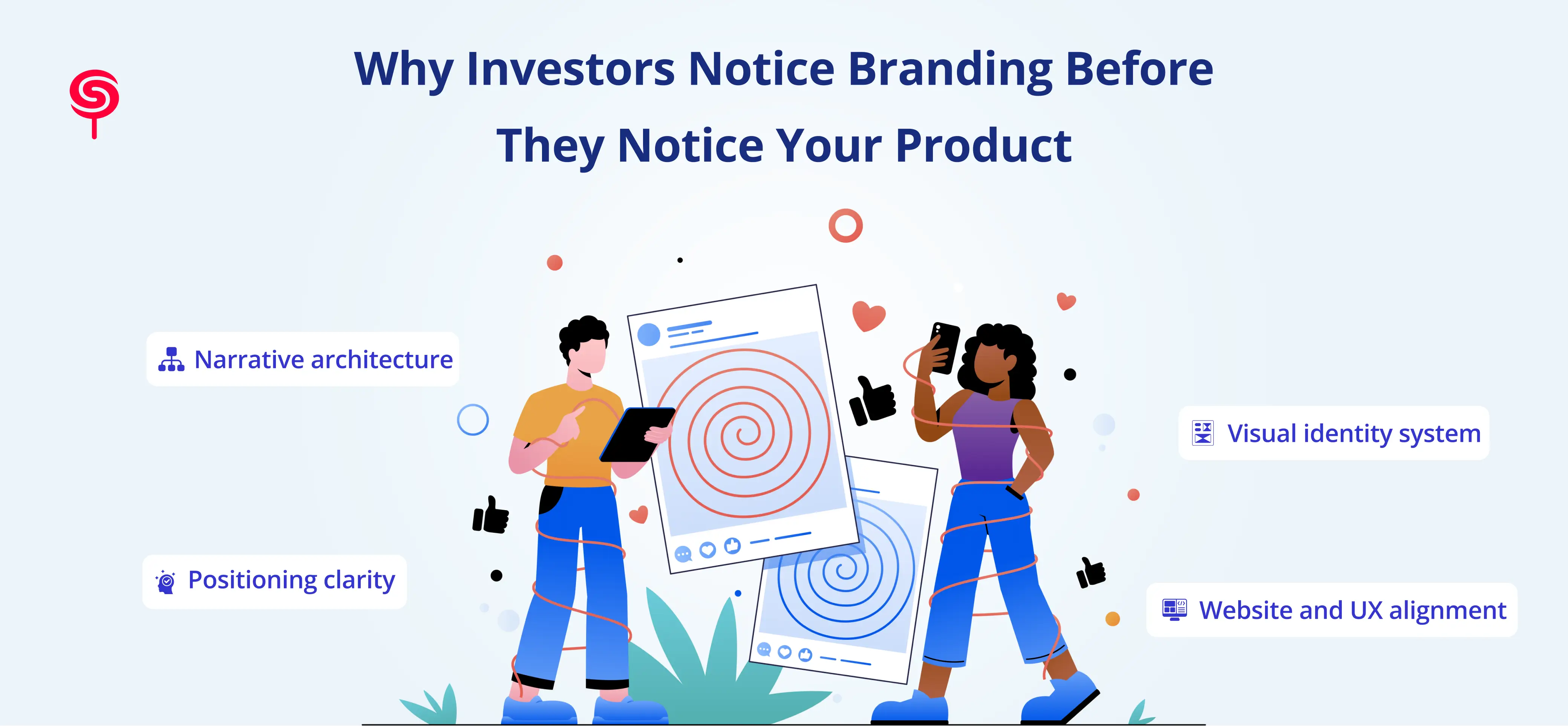
Positioning clarity defining exactly who the company serves and why it matters now
Narrative architecture building a consistent story across website, deck, and public presence
Visual identity system establishing typography, color, and design language that reflect the company's maturity
Website and UX alignment ensuring the digital experience matches the ambition of the pitch
Brand guidelines documenting standards so consistency holds as the team grows
This is where strategic branding and product design partners like CandyStudio become valuable: translating positioning and narrative into a cohesive system across every investor touchpoint.
From Brand Perception to Business Outcomes
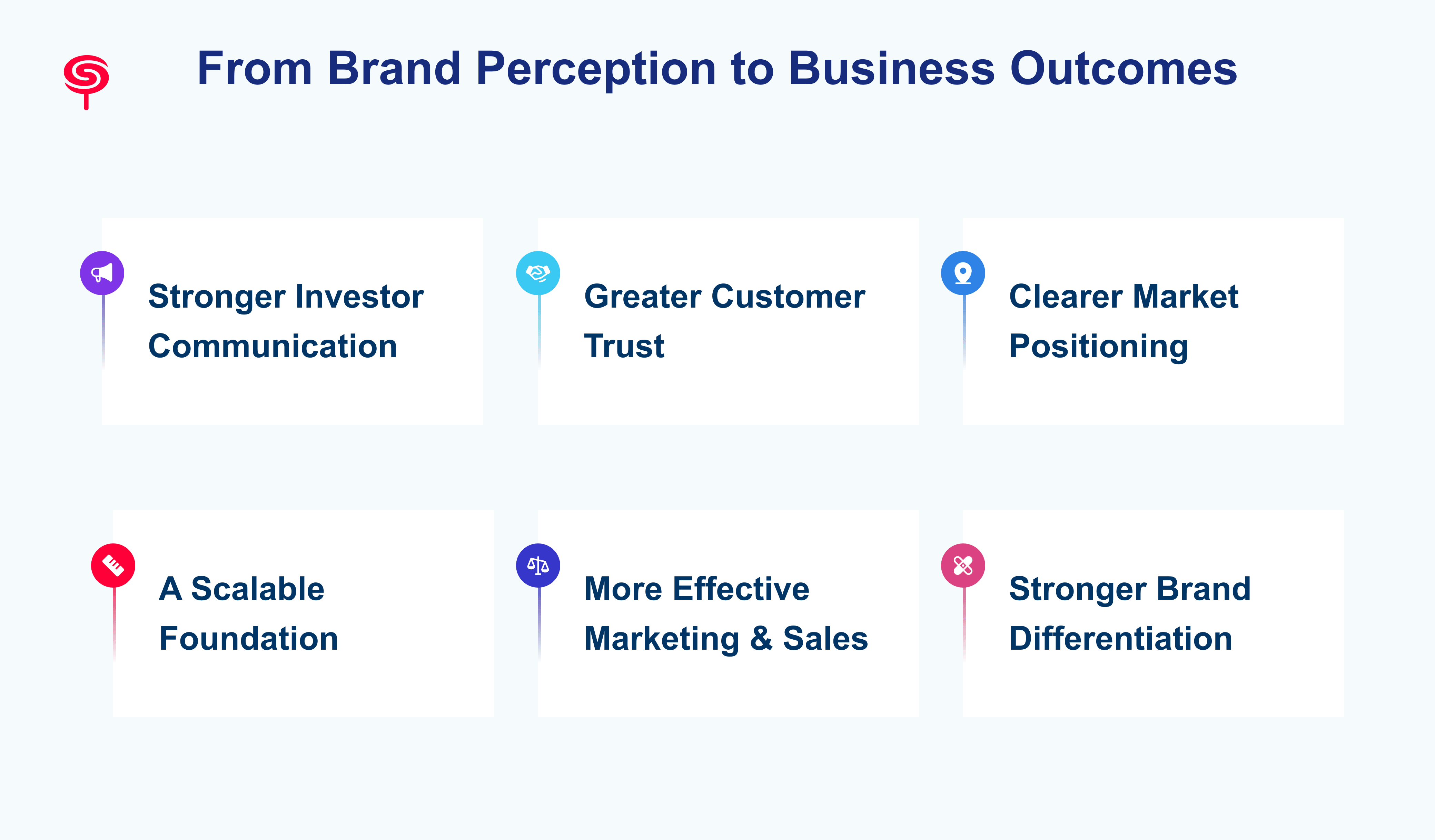
Strong branding doesn't just influence fundraising. It compounds across the business.
Stronger Investor Communication
Clear brand narrative makes it easier for investors to champion the company internally, accelerating decision-making.
Greater Customer Trust
The same clarity that reassures investors also builds credibility with customers evaluating the product.
Clearer Market Positioning
A defined brand identity sharpens how the company is understood relative to competitors.
Stronger Brand Differentiation
Consistent messaging and design make it harder for competitors to blur the lines between offerings.
More Effective Marketing and Sales
Sales and marketing teams move faster when brand messaging is already clarified, rather than reinventing positioning for every campaign.
A Scalable Foundation for Business Growth
Brand systems built early reduce the cost and confusion of rebranding later, supporting smoother growth as the company scales.
When Should a Startup Invest in Branding?
The ideal window for branding investment is before major inflection points particularly before fundraising, before a product launch, or before a significant growth push. Companies preparing for a raise, a rebrand, or a new market entry benefit most from addressing brand strategy proactively, rather than reactively fixing perception issues mid-process.
Conclusion
Investors form judgments long before they evaluate a product roadmap or financial model. Branding across website, pitch deck, and founder presence is often the first and most influential signal a startup sends. For founders preparing to raise capital, launch a product, or scale into a new market, treating brand strategy as a core business function, not a cosmetic afterthought, is one of the highest-leverage decisions available.
Startups that align their brand with the sophistication of their product don't just look investor-ready they communicate credibility before a single word of the pitch is spoken. For teams evaluating this gap in their own presentation, working with a strategic branding and product design partner can close it before it costs a meeting, a round, or a customer.
Frequently Asked Questions
1. Why does branding matter to investors?
Branding gives investors a fast, indirect way to judge a founding team's clarity, discipline, and market understanding before any product evaluation occurs.
2. Do investors care about startup branding?
Yes. Branding shapes first impressions across websites, pitch decks, and founder profiles, all of which influence investor confidence.
3. Does branding help startups get investment?
Strong branding doesn't replace fundamentals, but it removes friction and builds credibility, making it easier for investors to engage seriously with a company.
4. Why should a startup have a strong brand identity?
A strong brand identity differentiates the company, builds trust faster, and supports every future marketing and sales effort.
5. How can startups improve brand credibility?
By auditing every investor touchpoint website, deck, and founder presence for consistency and intentional design.
Share this blog!
Latest Blogs
Explore our latest insights on design, AI, and digital innovation.