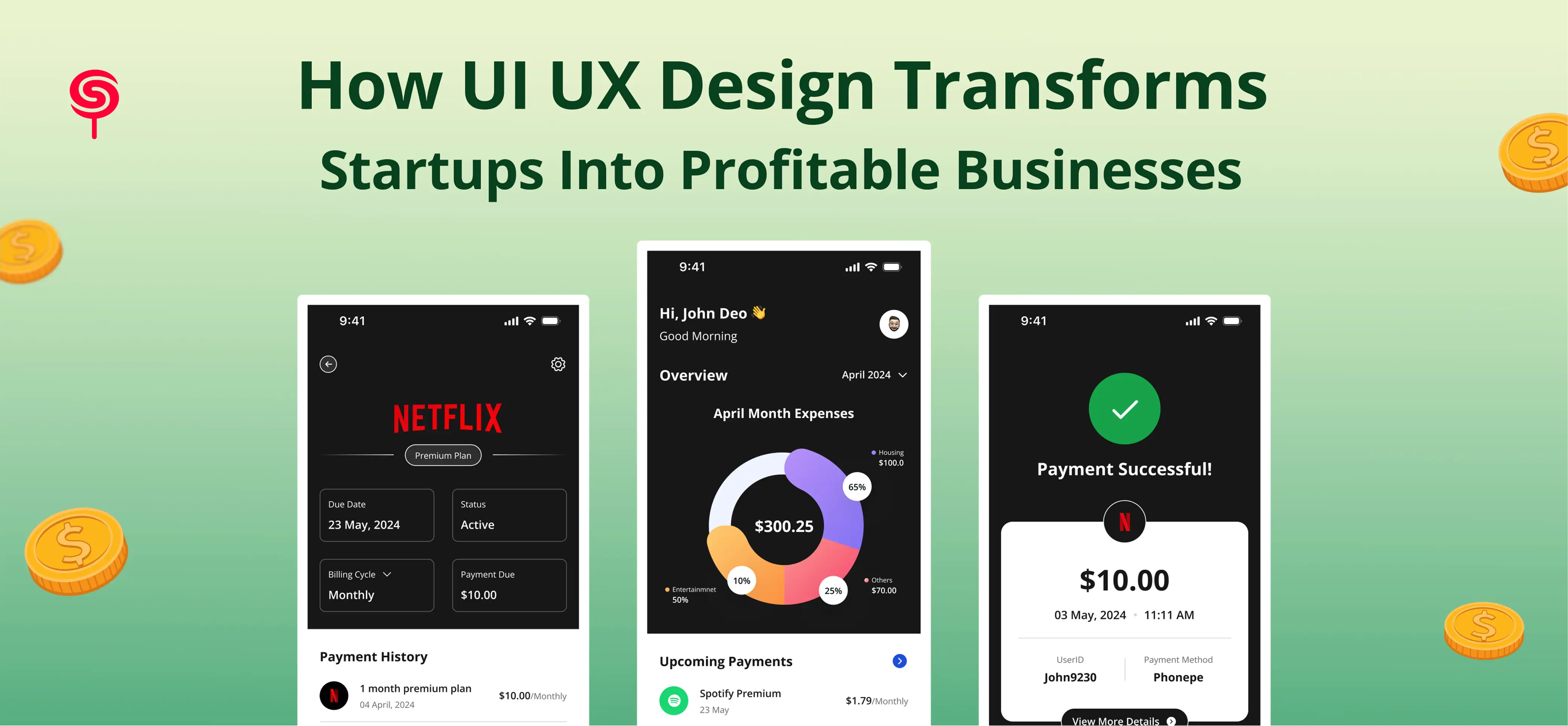
How UI UX Design Transforms Startups Into Profitable Businesses
Author
Vignesh
Published On
In the digital-first world, users judge a product within seconds. If your website or app feels confusing, slow, or outdated, users leave often without a second chance. This is not a design problem alone; it’s a business problem.
UI/UX redesign helps businesses improve existing digital products by aligning user needs with business goals. More than just a visual refresh, it focuses on usability, clarity, and conversion.
In this blog, we’ll explain what UI/UX redesign means, why it matters, how it impacts business growth, and how companies can scale using a strategic redesign approach.
What Is UI/UX Redesign?
UI/UX redesign is the process of improving an existing product’s interface and user experience to solve usability issues and meet evolving business needs.
UI (User Interface): Visual elements such as layout, typography, colors, buttons, and spacing
UX (User Experience): User flow, navigation, ease of use, accessibility, and interaction design
Unlike designing from scratch, redesign builds on what already exists fixing friction points, improving performance, and enhancing user satisfaction.
A successful redesign focuses on why users struggle, not just how the product looks.
Why Businesses Need UI/UX Redesign
Digital products must evolve with users, technology, and market expectations. Businesses often need a redesign when:
Conversion rates are declining
Users drop off before completing actions
The product feels outdated or inconsistent
Mobile experience is poor
Business goals or target audience have changed
Ignoring these signals results in lost revenue and reduced customer trust. UI/UX redesign ensures your product stays relevant, competitive, and effective.
Business Impact of UI/UX Redesign
Higher Conversion Rates
Clear CTAs and intuitive flows guide users toward actions like sign-ups or purchases.
Improved Customer Retention
A smooth experience encourages users to return and stay loyal.
Reduced Support Costs
Good UX reduces confusion, complaints, and customer support tickets.
Stronger Brand Trust
Professional, consistent design builds credibility and confidence.
Faster Business Scalability
A well-structured UX allows faster feature additions and growth.
How redesign fits into design thinking
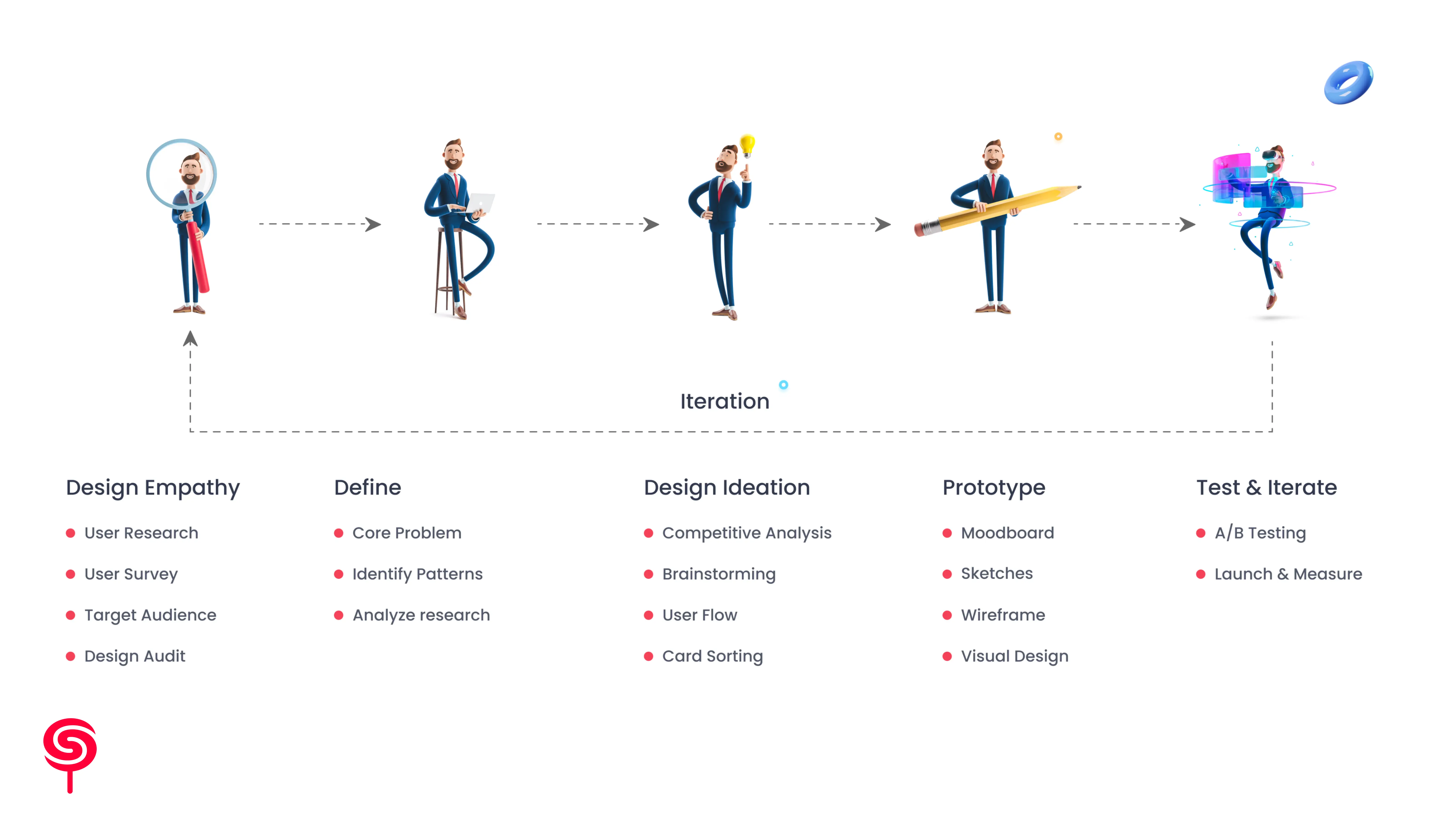
UI/UX redesign is deeply connected to design thinking, a problem-solving approach focused on users.
Empathize: Understand users through research, analytics, and feedback
Define: Identify pain points and business challenges
Ideate: Explore better solutions and flows
Prototype: Create testable design solutions
Test & Iterate: Improve continuously based on real usage
Redesign ensures decisions are based on evidence, not assumptions.
Real-World Example: UI/UX Redesign in Action
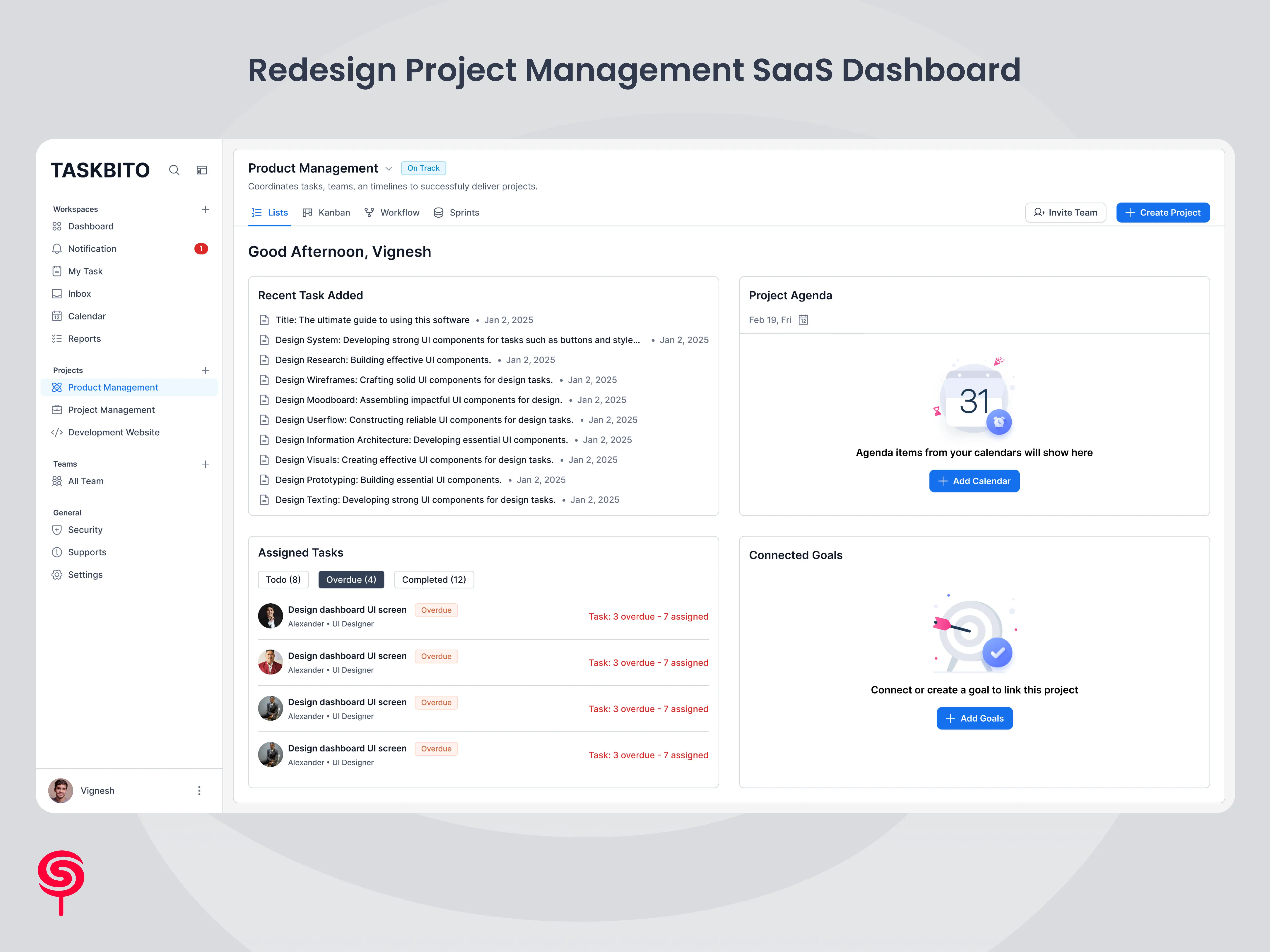
Consider a SaaS dashboard used by growing startups.
Before redesign:
Complex navigation
Too many actions on one screen
High onboarding drop-off
Redesign approach:
Simplified navigation
Clear visual hierarchy
Step-by-step onboarding flow
After redesign:
35% increase in user activation
28% reduction in churn
Faster task completion
This shows how redesign directly influences user behavior and business outcomes.
How UI/UX Redesign Helps Scale a Business
Data-Driven Design Decisions
Using user analytics, heatmaps, and behavior tracking ensures redesign decisions are measurable and effective.
Mobile-First Experience
With most traffic coming from mobile devices, responsive and mobile-first design is essential.
Scalable Design Systems
Design systems ensure consistency, speed, and easier future updates.
Conversion-Focused UX Strategy
Designing with business KPIs in mind improves ROI and revenue growth.
Continuous Optimization
UI/UX redesign is not a one-time task it evolves with user behavior.
Conclusion
UI/UX redesign is a strategic investment that directly impacts conversions, retention, and scalability. Businesses that prioritize user experience gain a competitive edge and grow faster.
If your product is struggling to convert or retain users, the solution isn’t more features it’s a better experience.
🚀 A thoughtful UI/UX redesign can transform your product into a growth engine.
Frequently Asked Questions
1. What is UI/UX redesign and why is it important for business growth?
UI/UX redesign improves an existing product’s usability and visual experience to align with user needs and business goals. It is important because better user experience leads to higher conversions, stronger brand trust, and increased revenue.
2. When should a company consider a UI/UX redesign?
A company should consider a UI/UX redesign when conversion rates drop, users face usability issues, the product looks outdated, or business goals and target audiences change.
3. How does UI/UX redesign improve conversion rates?
UI/UX redesign simplifies user journeys, improves navigation, clarifies calls-to-action, and removes friction points—making it easier for users to complete desired actions like sign-ups or purchases.
4. Is UI/UX redesign only about visual changes?
No. UI/UX redesign goes beyond visuals. It focuses on user behavior, usability, performance, and accessibility to solve real user problems and deliver measurable business results.
5. How long does a UI/UX redesign project usually take?
A UI/UX redesign project typically takes 4–12 weeks, depending on product complexity, research depth, and testing requirements.
Share this blog!
Latest Blogs
Explore our latest insights on design, AI, and digital innovation.